
Simple software for complicated work.
We build software that stays understandable.
Most of what software costs comes after launch, in fixes, new features and the next developer trying to work out why something was built the way it was. So we keep systems small, write our decisions down, and hand over code anyone on your team can pick up.
Work
-
Monolith
2026
A simpler iPhone camera app. Double-tap anywhere on the viewfinder to take the photo, and it’s developed from the sensor’s RAW data in the tone you picked.
Solo designer & developer
Read the case Beta site -
Sprig
2026
A calm, native Git client for the Mac. Diffs, history, branches and a built-in terminal in one window, bought once rather than rented.
Solo designer & developer
Visit the site Buy a license -
Grabber
2026
A tiny macOS utility for moving any window by holding a modifier key and dragging from anywhere on its surface.
Solo developer
Read the case GitHub -
Chevalet
2025
A platform where artists share work made by people, built around a human-only policy that’s actually enforced.
Founder, product, design & engineering
Read the case Live site -
Astro Analysis Service
2026
A typed API and frontend for exploring exoplanet host-star data from the NASA Archive.
Solo developer
GitHubContext, approach, outcome
Context. The NASA Exoplanet Archive holds a lot of interesting data about stars that host planets, but getting to it meant writing custom queries or reading the documentation until the schema made sense. We wanted people to be able to explore the dataset before they understood how it was organized.
Approach. We split it into a typed API and a separate frontend from the start, and added Prometheus metrics and structured logging early, so a small project got built like production work.
Outcome. It’s open source, and it’s now our reference for setting up a small service that can be monitored and maintained from the first commit.
Services
-
Web & mobile apps
-
Internal tools & automation
Back-office software, integrations and automations that take repetitive work off your team and keep your data in one place.
As in the Studio CRM that runs our own clients and invoices.
-
Product & interface design
One person, start to finish.
Atelier Patel is a studio of one. Its founder, Rushabh Patel, runs every engagement from the first call to the handover, so the person making the decisions is the one who has to live with them.
-
Discovery
We map the problem before writing a line: who uses it, what it replaces, and what has to be true for it to work.
-
Build
You get working software every week, in short cycles. There are no hand-offs, because there’s no one to hand off to.
-
Handover
You get documentation, tests and a codebase your team can read, and you can still reach the person who built it long after launch.
Who you’ll work with.
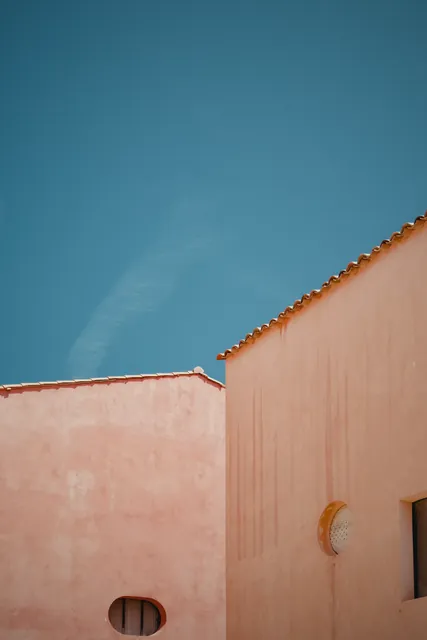
Rushabh Patel: PhD engineer, software developer and photographer based in Lausanne. I founded Atelier Patel to build apps and tools for clients and for our own products, and I take photos whenever I can.
Right now I’m shipping software, running Atelier Patel and Chevalet, and shooting on a Sony A7III.





Before working together.
Who do you work with?
Founders and teams who need a product, an internal tool or a redesign, and would rather have one accountable person than an agency chain.
Who will actually work on my project?
Rushabh Patel, the founder. The studio is one person, so whoever you speak to on the first call designs, builds and hands over your project.
How does a project start?
Write to contact@atelierpatel.com with a few lines on what you’re building, who it’s for and when you need it. You’ll hear back from Rushabh directly, since there’s no sales team in between.
What does it cost?
Each project is priced on its own scope. Tell us what you’re trying to build and you’ll have a clear estimate before any work starts.
Do you work outside Switzerland?
Yes. The studio is based in Lausanne and works with clients abroad, including in Australia, across time zones.